Home review
Most people who watched Home in theaters back in 2015 had no idea it started life as a fairly dense middle-grade novel with a framing device, a cross-country road trip, and an ending that involves the main character's own obituary. The film kept the broad strokes — an alien invasion, a girl searching for her mother, an unlikely friendship — and quietly changed almost everything else. Here are the specific questions that come up most once someone actually reads the source material and realizes how much got reworked along the way. None of these changes were secret at the time — Rex himself spoke publicly about the adaptation process — but a decade later, most viewers encountering Home for the first time on streaming have no idea a book exists at all, let alone how far the finished film strayed from it.
Is Home actually based on a book, and how different is it?
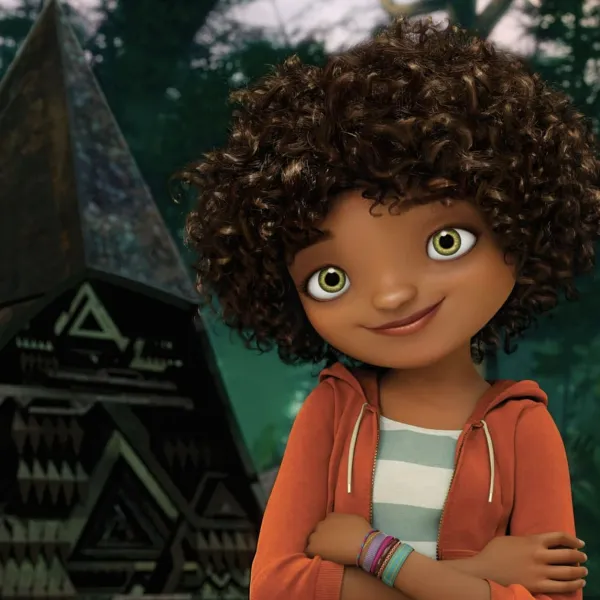
Yes, and considerably different. The film adapts Adam Rex's 2007 middle-grade novel The True Meaning of Smekday, which frames its entire story as an essay Tip writes for a school assignment tied to a "National Time Capsule Project" — a structural device the movie drops entirely in favor of a straightforward narrated opening from Oh's perspective instead of Tip's. The book also sets its story mostly in Florida, with Tip searching for her mother near a thinly veiled Disney World stand-in called "Happy Mouse Kingdom," while the film relocates the human refugee population to the Australian Outback and adds Paris as a key location the book never visits at all.
The ending changes most dramatically of all. Rex's novel closes with something the film never attempts: Tip's own obituary, revealing she lived to the age of 113 and died at an actual unveiling of the time capsule her essay was written for. The movie, aimed squarely at a younger, more mainstream family audience, ends instead with Tip, Oh, and Lucy alive and settling into something like a found family, a far more conventional and reassuring note than the book's quiet, decades-spanning coda. Even the invasion's inciting incident shifted: the book sets the Boov's arrival specifically on Christmas Eve, renaming the holiday "Smekday" as part of the alien takeover, a detail baked directly into the source novel's title that the film's more generic, year-round setting doesn't reference at all.
Why is the alien character named "Oh" in the movie instead of "J.Lo," like in the book?
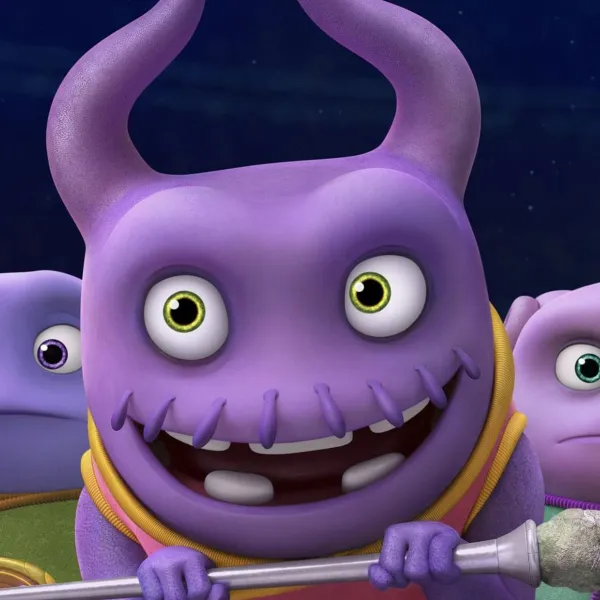
The book's version of the character is actually named J.Lo, a nickname the other Boov give him as an insult, and it's a direct reference to Jennifer Lopez. The film changed his name to Oh, reworking the joke so it now comes from other Boov characters reacting to his presence with disappointed exclamations of "oh," rather than keeping the original pop-culture-specific gag intact for a film with a much longer shelf life than a single topical joke could realistically support. The production found a clever way to keep a nod to the original name anyway: casting the actual Jennifer Lopez as Lucy, Tip's mother, turns what could have been a lost reference into something closer to an inside joke for anyone who'd actually read the book first. It's a rare case of an adaptation choice technically erasing a joke from the text while still finding a way to preserve its spirit through casting alone, which is part of why the connection tends to surprise people who assume the Lopez casting was simply a coincidence rather than a deliberate callback.
What else got cut or softened between the book and the movie?
Several supporting characters disappeared entirely, and they weren't minor cuts. Chief Shouting Bear, a Native American junk dealer and war veteran who accompanies Tip for part of the book's journey and whose presence draws explicit parallels between the Boov invasion and the history of colonization in America, doesn't appear anywhere in the film. Dan Landry, a self-serving politician in the book who tries to take undeserved credit for the resolution of the human-Boov-Gorg conflict, was cut as well, along with the layer of political satire his character carried. Both cuts point in the same direction: the book used its alien-invasion premise as a vehicle for pointed commentary on how real-world power structures actually behave under crisis, while the film consistently chose the version of each scene that kept the story moving toward a simpler, friendship-centered resolution instead.
The tone shifted in smaller ways too. Book Lucy is written as somewhat oblivious and none too sharp, described by Tip mainly in terms of her looks rather than her competence, while movie Lucy is level-headed and capable from her first scene onward — a change that lines up with casting an actual film star in a role the book had written as more of a punchline. Captain Smek also became a more clear-cut villain on screen: the book portrays him as merely incompetent, while the film gives him direct responsibility for provoking the Gorg conflict, ordering executions, and spreading propaganda to cover his own mistakes, setting up his replacement by Oh as Boov captain by the film's end. Even Pig, Tip's cat, changed gender between versions, going from female in the book to male in the film, though the character's role shrank either way from an active plot device in the novel to mostly comic relief on screen. In the book, clones of Pig actually play a direct role in resolving the Gorg conflict through an allergic reaction the aliens have to cats, a genuinely strange plot mechanic the film drops entirely in favor of Pig simply helping Tip escape her initial abduction near the story's start and largely fading into the background after that.
Did the book get a sequel, and did it ever become a second movie?
It did get a sequel, and the timing lines up almost too neatly with the film's release: Adam Rex published Smek for President! on February 10, 2015, just weeks before Home hit theaters that March. The sequel follows Tip and J.Lo on what starts as a summer vacation to New Boovworld and turns into J.Lo pursuing an actual pardon from Captain Smek, continuing storylines the movie never touches since it diverges so heavily from the books by its own ending.
No theatrical sequel to Home was ever produced, however; instead, the franchise continued through Home: Adventures with Tip & Oh, a Netflix animated series that launched in 2016 with a new voice cast and ran for several seasons before being pulled from the platform entirely in 2024 over licensing changes, rather than through any further adaptation of Rex's actual books. That leaves Smek for President! in a strange position a decade later: a genuine, published continuation of the story that most Home viewers have never heard of, let alone read, since nothing about the film's marketing or its Netflix follow-up ever pointed audiences back toward Rex's original two-book series.
How well did Rihanna's "Towards the Sun" actually perform?
Reasonably well internationally, though its commercial impact varied a lot by market. The song peaked at number one on Billboard's Kid Digital Songs chart in the US, reflecting its close ties to the film's young target audience, while performing far more modestly on the UK Singles Chart at number 76 and reaching number 22 in France. It also picked up Gold certification in Australia, reflecting combined sales and streaming figures around 35,000 units.
Critics were consistently kinder to the song itself than to the film's screenplay, with several reviewers comparing its big, anthemic production to Coldplay and describing it as a "slow-burning stomper" built around pounding drums, layered harmonies, and children's choir vocals, the kind of stadium-scale production choice that made the track stand out from a fairly conventional animated-family-film soundtrack. That gap between the song's warm reception and the film's own mixed reviews is worth sitting with on its own: it's a reminder that a movie's soundtrack can genuinely outlive and outperform the film it was written for, especially when a global pop star lends a project both her voice and her own separate promotional machine.
Home changed substantially more from Adam Rex's source novel The True Meaning of Smekday than casual viewers likely realize, renaming its alien lead from J.Lo to Oh, relocating its setting from Florida to the Australian Outback, cutting characters like Chief Shouting Bear and Dan Landry along with the colonialism and political-satire themes they carried, and swapping the book's bittersweet, decades-spanning ending for a warmer, more conventional family reunion. The book's own sequel, Smek for President!, released the same month as the film but never got its own screen adaptation, while Rihanna's "Towards the Sun" outperformed the film's mixed reviews commercially, topping Billboard's Kid Digital Songs chart and earning Gold certification in Australia.